
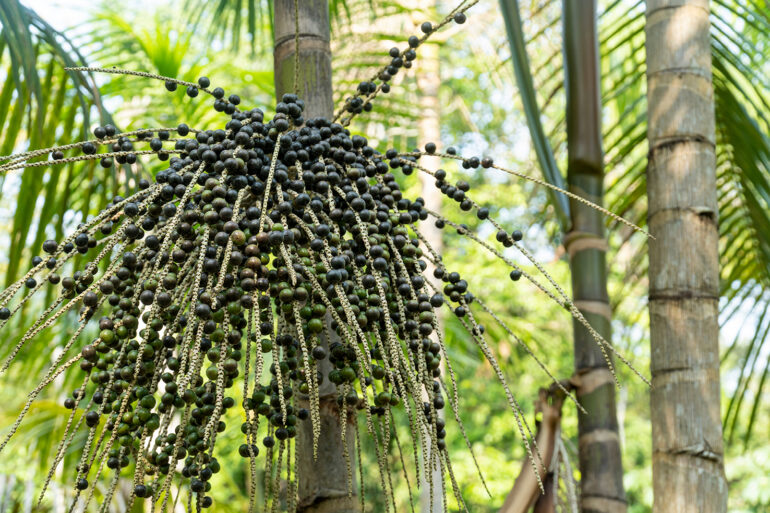
On January 8, 2026, Brazil published Law 15,330/2026, officially recognizing açaí berry as a Brazilian national fruit in a bid to protect it from so-called “biopiracy”, i.e., the illegal exploitation of genetic resources and traditional knowledge (“ATK”). Açaí berry is a ‘superfood’ rich in nutrients which grows almost exclusively along the Amazon River, and particularly in Brazil, its largest producer and exporter, producing about 1.74 million tons of açaí and generating around BRL 7.7 billion in 2024.
The legislative recognition of açaí berry as a national fruit – following the earlier designation of cupuaçu in 2008, which itself responded to attempts to register “cupuaçu” as a trademark in Japan – is largely symbolic in nature. Law 15,330/2026 does not introduce new substantive rights or regulatory mechanisms, as Brazil already comprehensively governs access to genetic resources and the sharing of benefits arising from their use, under Law 13,123/2015 and through its implementation of the Nagoya Protocol. Its practical significance therefore lies less in creating additional protection than in drawing renewed political and public attention to the enforcement of Brazil’s existing access and benefit‑sharing regime.
How The Brazilian ABS Rules Work?
Brazil became a party to the Convention on Biological Diversity on May 29, 1994, and its promulgation occurred on March 17, 1998. The Brazilian current framework for ABS is established under Law 13,123/2015, further regulated by Decree 8,772/2016. On June 2, 2021, Brazil also became a party to the Nagoya Protocol. Although its promulgation occurred on December 28, 2023, to date Brazil has not adopted any specific national legislation or regulation to implement it.
Conversely, Brazil has established a government-maintained online system that aims to track all access to Brazilian GR (a.k.a. genetic heritage, according to Brazilian Law) and ATK. The system is called SisGen and its use is mandatory whenever there is an access to GR and/or ATK.
Açaí Berry and Brazilian ABS Rules: When Do They Apply?
Under Brazil’s ABS Rules, ABS requirements are applicable to:
- Access to Brazilian genetic heritage (“BGH”) or ATK for research and development (“R&D”) or basic research activities;
- Shipment abroad of BGH samples intended for access; and
- Economic exploitation of finished products or reproductive materials arising from the access to BGH or ATK carried out after Law 13,123/2015 entered into force.
In view of the foregoing, growing açaí berry as a food commodity is not an activity that falls under the Brazilian ABS Framework. However, when açaí berry originating from Brazil is used for R&D purposes, that activity falls within its scope. Shipment abroad of açaí berry BGH samples intended for R&D activities or basic research will also trigger the application of those rules.
Critically, Brazil’s ABS Rules also apply in cases of economic exploitation of finished products that are derived from access to açaí berry BGH and/or ATK without requiring any additional processing, if that access is a key element of added value to the functional characteristics or marketing appeal of said products. As a result, products such as dietary supplements with açaí berry as a key main element of their functional characteristics or marketing appeal, will fall within the scope of the Brazilian ABS Rules. They must (i) notify the Genetic Heritage Management Council (“CGen”) through SisGen about said products prior to their economic exploitation, filling out the corresponding SisGen electronic form; and (ii) share benefits, although some users may be exempted from that last obligation under certain circumstances.
Sanctions For Non-Compliance
Among the wide range of sanctions available, the Brazilian authorities may order the temporary suspension of the manufacture and sale of the finished products resulting from access to açaí berry BGH or ATK until the settlement. They may also impose fines, which will vary depending on whether the infringer is a natural or a legal person.
For instance, fines for said economic exploitation without prior notification to CGen range from BRL 3,000.00 (three thousand reais) to 10,000,000.00 (ten million reais).
The same logic applies to the non-payment of the annually due instalment resulting from said economic exploitation, with fines going from BRL 1,000.00 (one thousand reais) to 10,000,000.00 (ten million reais).
Relationship Between Brazilian And EU ABS Rules: Implications For EU Users Using Açaí Berry Originating From Brazil
In the European Union (“EU”), Regulation (EU) No 511/2014 on compliance measures for users from the Nagoya Protocol requires companies that conduct R&D on the genetic and/or biochemical composition of açaí berry originating from Brazil, to demonstrate compliance with the abovementioned ABS laws of Brazil.
The EU’s definition of “utilization” is narrower than in Brazil. While Brazilian legislation is triggered by R&D into the properties of açaí berry, as well as its use in marketing of products; the EU rules only apply in case of actual R&D.
As a result, both Brazilian and EU compliance obligations would apply where a food supplement contains açaí berry originating from Brazil and makes a lawful health or nutrition claim – as defined and regulated by the corresponding Union provisions – since in that case the claim should be based on robust scientific research thus meeting this EU definition of “utilization.” Food products containing Brazilian açaí berry where no “utilization” has taken place would not have obligations under the EU regime, but would still have benefit-sharing obligations in Brazil.
Since each of the 27 EU Member States retains discretion over the sanctions to be imposed on EU users that fail to comply with the due diligence obligations set out in the EU ABS Rules, the corresponding sanctions may differ from one jurisdiction to another. The only limitation to said discretion is that those sanctions shall be effective, proportionate and dissuasive.
Practical Implications
EU users that economically exploit finished products derived from access to açaí berry BGH or ATK, and conducted R&D on said GR, may fall within the scope of both the Brazilian and EU ABS Frameworks.
Covington has assisted numerous life sciences clients in similar checks on user compliance across the EU and beyond, and our team stands ready to assist, in close collaboration with the Brazilian Firm Souto Correa.
If you have any questions, do not hesitate to reach out to Bart Van Vooren (bvanvooren@cov.com) and Anderson Ribeiro (anderson.ribeiro@soutocorrea.com).
***
Mathilde Raebisch of Covington & Burling LLP contributed to the preparation of this article.
Aline Ferreira of Souto Correa Advogados contributed to the preparation of this article.